Un Diálogo entre un Hombre y El Diablo

Old Nick

En este diálogo, El Diablo, disfrazado como un simple viejo, habla con un hombre. Intenta corromper la fuerza de voluntad del hombre y hacerlo más débil. 

————————————————————————————————–

El Diablo: Buenas

Hombre: Buenas, como le va, señor.

El Diablo: Va todo muy bien. Me permite ayudarle con esa carga tan pesada que lleva con usted? 

Hombre: Usted es muy amable, pero estoy bien, gracias. 

El Diablo: ¿Está usted seguro? Se ve muy muy pesada y acababa de decirme que quería ayudarle a alguien hoy. 

Hombre: Pues eso, sí, es muy admirable, pero esta carga me pertenece a mí y solo a mí. Es un deber mío llevarlo conmigo por ahora, entonces dársela a alguien más sería un acto de debilidad. Porque tengo que llevarla hasta mi destino.

El Diablo: ¡Qué varonil es usted! Pero señor, qué es más admirable y noble, llevar una carga suya o ayudarme a mí, un pobre viejo. Acabo de ayudarles a muchos otros hombres, y me dio tanto gusto hacerlo. No haría esto por mí?

Hombre: ¿No le puedo ayudar de otra forma? Por ejemplo, sería mejor que no llevara esa bolsa. Sería más fácil caminar. Es que mi deber ahora no es ser lo más noble o amable. Es llevar esta carga y nada más. 

El Diablo: Hmm. Debe de estar muy cansado haciendo su deber con tanta fe. Quién le dio este deber tan importante? 

Hombre: Yo me lo di a mí mismo. 

El Diablo: Ah pues qué suerte tenemos!

Hombre: Perdón pero no lo entiendo. 

El Diablo: No? Pues si usted ha creado las reglas de este juego, usted mismo sí puede romperlas!

Hombre: Es precisamente porque soy el autor de este deber que no lo romperé. Faltar a este deber sería un acto contra mi alma. Le pregunto de nuevo, ¿Le puedo ayudar con algo más?

El Diablo: Por supuesto, me puede escuchar por un rato más. Soy un pobre viejo y nomas quiero hablar con la gente del camino. 

Hombre: Está bien, ¿en qué puedo servirle? 

El Diablo: Se sabe que no todos las promesas pueden ser cumplidas. Sí?

Hombre: ¿Cómo así? 

El Diablo: Sí yo prometo a mi hijo que lo voy a llevar al parque en la mañana del próximo día, y llueve furiosamente de la noche a la mañana, no estaría haciendo algo malo si no lo llevara, o sí?

Hombre: Supongo que no, no estaría haciendo algo malo. Es entendible cambiar de opinión así y faltar a su palabra. Y, señor, ¿tiene usted un hijo? 

El Diablo: Tengo muchísimos… pero volviendo al tema. En el momento en el que decidió embarcarse en este viaje y llevar esa carga tan pesada, supo que habría un viejo aquí queriendo ayudarle con su carga tan pesada? 

Hombre: No… no lo supe. 

El Diablo: Entonces, mi amigo tan pesado, con los ojos tan agotados, déjeme ayudarle. Sólo quiero ayudar. Tiene que haber visto ese lago tan bonito unos miles atrás. No le complacería quedarse ahí un rato para descansar? 

Hombre: Sí, sé que es entendible. Quizá no estaría haciendo nada malo en faltar a mi promesa, pero, aún no sé. Este deber forma una parte de mí. Quiero hacerlo bien, no simplemente evitar hacerlo mal. Quizá mi destino es diferente y debo cumplir mi promesa. ¿Puede que sea así, no?

El Diablo: Eso me suena a soberbia, amigo mío. ¿No recuerdas lo que le pasó a Lucifer por ese pecado?

Hombre: Puede que tengas razón, mi amigo tan sabio… No quiero ser egoísta y considerarme mejor que los demás. 

El Diablo: Por supuesto que la tengo. Descanse. Solo quiero ayudar. Déjeme recoger sus cosas tan pesadas y se puede ir al lago ese tan tranquilo y bonito.

Hombre: Pero… mi deber… mi misión… mi promesa…

El Diablo: Shhh. Déjame ayudarle. Lo hecho, hecho está.

Hombre: Estoy muy cansado… eso sí… supongo que no me haría daño. 

En ese instante, el Diablo deslizó sus dedos alrededor del cuello del hombre para quitarle la carga. Cuando el hombre sintió el frío y el aura tan escalofriante del viejo, se sobresaltó y se dio cuenta, en un instante, de la identidad del viejo Diablo.

Hombre: Cómo se atreve, Diablo asqueroso, tocarme con esos dedos tan repugnantes. ¡Lárguese! Aléjese de mí, bestia, cuya trampa casi me robó mi sueño y mi destino! Por qué me quedaría en un lago de otra persona, cuando hay algo que me pertenece a mí más allá! Algo que es mío! Fuera de mi vista, diablito, sus palabras viles no me van a derrotar. No me van a vencer. ¡Busca debilidad en otro sitio!

Al  escuchar estas palabras, el Diablo no tenía nada con que pude responder. Él nunca tendrá nada que decir frente a la fuerza. Solo se puede con la debilidad. Recuerda que lo suyo es quitar. A veces quiere quitar lo que te importa, pero a veces no. A veces el Diablo quiere quitar lo que él sabe que tú le quieres dar. Es entonces cuando se ve como un ángel. Y es entonces cuando es más peligroso. No hay una mejor manera de robarle el destino de alguien que pedirlo muy amablemente bajo la ilusión de caridad. 

Simon Bolívar and Violence of Action.

LEAD Technologies Inc. V1.01

Simón Bolívar, El Libertador, dedicated his life and the entirety of his family fortune to one mission: the complete removal of Spain from the continent of South America.

In the course of this mission, he failed several times and was driven from the continent – sometimes by the Spanish and other times by disgruntled former allies – and forced to take shelter on nearby islands. On those islands, he would write letters and read books and reflect incessantly on what he had done wrong and how he could remedy his failures. But there was no question that he would return. It was all he could do. It was his mission. 

After several such failures, he would finally succeed. He marshalled a formidable force and engaged in one of the boldest military maneuvers attempted. He took his forces and crossed the Cordillera of the Andes, an icy and high-altitude mountain range, in order to get the jump on the Spanish forces in the nearby city of Boyacá. The great victory at Boyacá, which took place on August 7th, 1819, is celebrated as the independence day for Colombia, and is a standing testament to the inimitable audacity of Bolívar.

Throughout his military career, Bolívar would engage in many such risky and bold maneuvers, revealing the element of his character that has so captivated me of late.

For Bolívar, inertia was the enemy. Bolívar believed, much like other great revolutionaries, that our greatest battle is fought against that voice — sometimes coming from others and sometimes from ourselves — that tells us: wait and see. For Bolívar, the mistakes resulting from over-zealousness and action paled in comparison to the mistakes resulting from timidity and passivity. Furthermore, the benefits gained from the former towered above those of the latter. As a testament to Bolívar’s relentless aggression and energy, his Llaneros, the rugged and infamously savage cavalry from the north of Venezuela, called him Culo de Hierro (Iron Ass), for his ability to ride horses for shocking amounts of time to cover significant distance.

The U.S. Navy Seals, in their self-defense manuals, employ a term that I think aptly encompasses this Bolivarian attitude: violence of action, which they define as:

“Violence of action means the unrestricted use of speed, strength, surprise, and aggression to achieve total dominance against your enemy…that any fighting technique is useless unless you first totally commit to violence of action.”

I take this to mean that one must, under the right circumstances, fully commit, mentally, to a disposition of aggression and violence (either literal or metaphorical) before engaging in any action. Every action may not be violent or aggressive, but the inclination is there, in the background, ready. “Violence of action”, then, is a philosophical commitment that enables the increased efficacy of further actions and makes possible the potential for lightning-quick decisions.

During his career, Bolívar lived up to this principle to a stunning degree. His “War to the Death” against the Spanish was so brutal and relentless that the Spanish began to fear him as something of an immortal. His military achievements dwarfed those of Washington to the north, and the territory of “The Gran Colombia” that he governed during his life spanned an area larger than any controlled by Napoleon during his reign. All this done on a continent with a racial, ethnic, and ideological diversity that made unity nearly impossible. But, against all odds, even if only for a time, unity he achieved. 

The people of the Gran Colombia united under Bolívar’s one single vision: a free America. 

While Bolívar had many goals during his lifetime, this was his great and single dream, and to this single end, he was successful. His monomaniacal, nearly Ahabian obsession with this task defined his life; but the narrow vision that this obsession brought him in turn also defined his death. 

Near the end of his life, while plagued by an undiagnosed tuberculosis, the Gran Colombia was falling apart. Conspiracies, factions, and a litany of ill-conceived lies suggesting Bolívar’s monarchical aspirations lead to his being rejected and ousted by his own government. To be sure, he was not perfect. His gifts in warfare did not always translate well to governance, and his many years in power lent credence to the accusations of tyranny. His obsession had been the freedom of America, and he had spent his life and fortune pursuing it to the neglect of all else. 

Now, dying from his illness, penniless, expelled from the capital, and unable to return to his home of Venezuela, he took refuge in the small coastal town of Santa Marta. There, surrounded by only a few friends, he wrote his last letter and died in exile:

“Colombians, you have witnessed my efforts to establish freedom where tyranny formerly reigned. I have worked unselfishly, giving up my fortune and my tranquillity. I resigned the command when I was convinced that you did not trust my disinterestedness. My foes availed themselves of your credulity and trampled upon what is most sacred to me–my reputation as a lover of freedom. I have been a victim of my persecutors, who have led me to the border of the tomb. I forgive them.

“Upon disappearing from your midst, my love prompts me to express my last wishes. I aspire to no other glory than the consolidation of Colombia; all must work for the invaluable blessing of union; the peoples, obeying the present government, in order to free themselves from anarchy; the ministers of the Sanctuary, by sending prayers to Heaven; and the soldiers, by using their swords to protect the sanctions of social order.

“Colombians, my last wishes are for the happiness of our country. If my death can help to destroy the spirit of partisanship, and strengthen union, I shall tranquilly descend to my grave.”

Bolívar’s battle against inertia has come to inspire me greatly. I too believe that the benefits tower over the risks associated with this attitude. I too believe that a violence of action must be adopted toward life — a readiness to act and to spring and to push at a moment’s notice. It is this inclination that has motivated many of my decisions over the last fear years. It is this inclination that sent me, during a world-wide pandemic, to teach in Colombia, a country to which I had never been .

The vision that I have for myself demanded that I do all in my power to achieve this goal. But it wasn’t until after I had already accepted the teaching position that I read Bolívar’s biography and came to realize the beautiful coincidence that my job would in fact be in Santa Marta, the small coastal city that harbored the final breaths of Simón Bolívar, El Libertador de América

Art: The Clear Eye of the World

Art: “The Clear Eye of the World”

SistineChapel-57ffd66e5f9b5805c2ac4916

What is Art? Well, trying to answer this question is a bit like trying to define “love” ‒ it’s a messy process and no one should feel too confident doing it. It’s also a bit like trying to catch wind or bottle lighting; it’s a process that seems contrary to the nature of the thing itself. 

Luckily for you (and for me), this is not my plan today. In this entry, I will be exploring what I view as the crucial difference that lies behind the distinction between Classical Art and Modern Art. My hope is that this entry will, at the very least, allow the reader to see art from a different angle. But let us return to the question that I aim to answer in this post. We could phrase the question as: 

What separates Classic from Modern art, and which one, if either, is superior? 

Now, I am not an art critic or historian; and I understand that taking the extensive world of art and mashing it into this binary distinction between “Classic” and “Modern” may strike many as crude and irresponsible, but I want to briefly defend this choice before I lay out the structure of this essay. 

The Classic vs. Modern Dichotomy

The distinction between what I call Classic art and Modern art is underscored by a particular philosophical difference rather than any particular stylistic or historical differences. So, whereas the Cubism of Picasso may differ greatly from the Expressionism of Rothko, I feel comfortable lumping them together in spite of this fact. 

Furthermore, the time period is mostly irrelevant. Classic art is being made today and, I would argue, Modern art could have been made thousands of years ago. The time period is relevant only insofar as it informs the trends and fashions of the day, and so the probability of one art type or another being made. Given this, it is certainly true that Modern art is what rules the modern era and Classical is what ruled the world up to about the turn of the 20th century. 

Lastly, I want to make clear both the structure and the intent of what you are about to read. In this entry, I will be exploring the world of art as divided by these two categories. I will be arguing, via the work of German philosopher Arthur Schopenhauer, that there is a philosophical difference between these two art forms that I believe gives us a new and interesting way of looking at them both. 

I do hold the view that Modern art is largely mistaken in many of its aims, but here I only aim to focus on one particular philosophical difference. I will maintain, however, that even this single philosophical difference is crucial enough to suggest that Modern Art should not be given the same artistic status as Classic Art. I will also mention many of the other failures of Modern art in order to show this central philosophical fault runs through them. Classic art is, in fewer words, superior art. 

This is not, however, a take-down of Modern art. There is incredible value in a variety of art styles, and I truly appreciate much that Modern art has to offer. My analysis will not be exhaustive nor scholarly; think of it as a meditation on art centered around an interesting idea within Schopenhauer’s aesthetic philosophy. 

I think this has been sufficient preamble, and so I return us to our question: 

What separates Classic from Modern art? 

As a preliminary answer we may say: 

the role of the self

Let’s start with Modern art, and its emphasis on “self-expression”

Modern art can be characterized by an adherence to a philosophical view of the purpose of art, which I have called the self-expression view. 

Self-Expression View:

Art is the supreme method of individual self-expression. Through art, one is able to express themselves, and good art is achieved when the artist expresses himself in a deep and unique way. 

This is the view of art which I believe almost everyone in my generation has unconsciously adopted. Art is about expressing how you feel, and it’s all about subjectivity.  This view of art pops up everywhere, from popular news articles to fancy Oscar Wilde quotes.

But this view also rests behind the Modern art movement as a whole, which takes many forms but unites in this sense among others. In this way, as we will see later, it acts against the traditional, Classical view of art. 

Take, for example, one of the most famous works of Jackson Pollock, Convergence (1952)
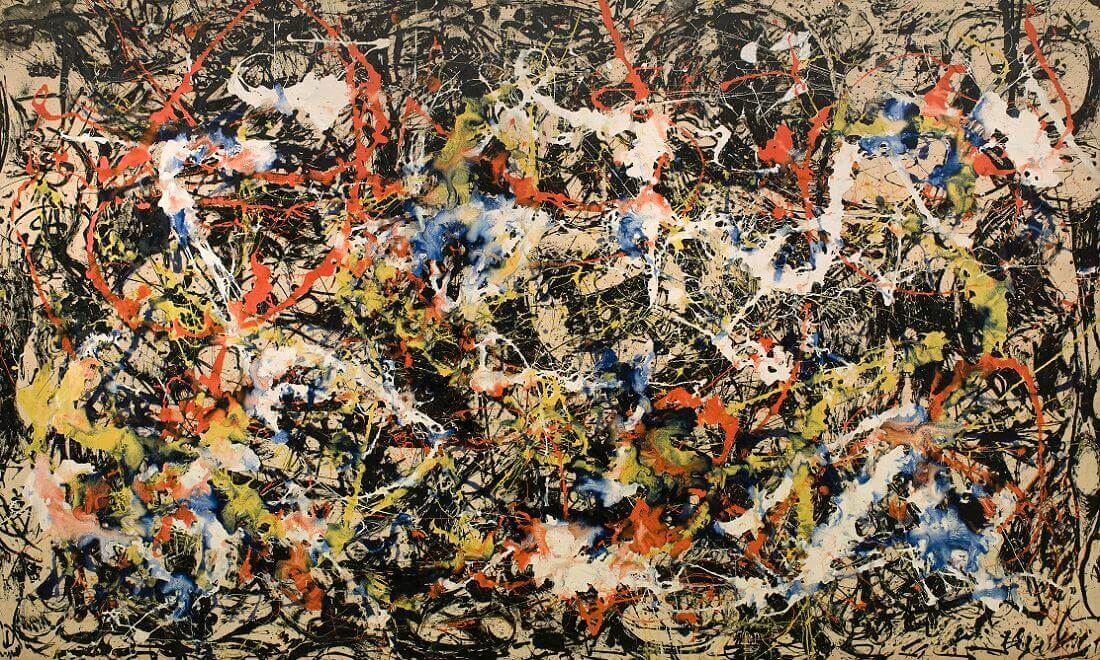
Pollock

This painting is considered one of the greatest works of the “Abstract Expressionist” movement, and it sold for 140 million dollars in 2006. Many regard it as a great work of art because of the way it, like many of Pollock’s paintings, suggests movement and activity through the arrangements of the strokes of the artist. The actions and movements of the artist himself become visible through the work of art. More importantly, many claim that Pollock’s abstract art evokes a variety of profound emotional experiences, and that through these we may also understand what it is that Pollock himself was feeling.

As another example, take Picasso’s famous Cubist painting, Guernica (1937)

guernica_all (1)

This painting, which I’ve had the pleasure to see in person, expresses the dramatic and painful nature of war, particularly the bombing which occurred in Guernica, Spain, Picasso’s home country. It’s full of imagery that is close to Picasso’s heart, such as the Spanish bull in the upper-left corner. This painting is regarded by many, including me, as a deeply moving work of art.

I want us to look at another piece, as it departs noticeably from the abstraction of Pollock and Picasso but still observes the chief value of contemporary art, i.e. self-expression. 

Mad Woman, Chaim Soutine (1919)

Mad Woman

I will leave here the description of the work given at its museum exhibit: 

“His violent brushstrokes and contorted lines communicate an almost unnerving tension, but nevertheless do not deny his subject a rich depth of character. Soutine invited viewers to observe the subject closely, to gaze into her eyes, and study her asymmetrical face and form. In many ways, this painting embodies the essence of the Expressionist style; Mad Woman visibly vibrates, contorts, shifts, pushes, and pulls, providing the viewer with Soutine’s vision of the inner torment of his sitter. In part, it redefined the genre of portrait painting. Simply by painting this mysterious (and possibly dangerous) woman up close rather than from a distance, Soutine established himself as an empathetic figure, but also as a daring visionary.”

In this painting, we are given aggressive insight into the mind of the artist. We are seeing someone as felt by the artist. We know this because nobody in our experience looks like this. The “violent brushstrokes” and the “contorted lines” make the artist himself visible to us. He is showing himself just like Pollock, and through his voice, we are made to feel and experience something ourselves.  

After looking at these three very different classics of modern art, I think the idea of self-expression should be clear. With these paintings, the artist is using techniques to make us aware of his presence, his actions, and his mind. The bold voice of the artist shouts the emotions to us and we feel them. 

Now, there are a number of additional elements that unite Modern art, but these will be briefly mentioned later. Furthermore, these pieces I have shown are some of the most revered and famous that exist in the world of modern art; the overwhelming majority of contemporary art observes the “self-expression” value much more crudely, and very often without the technical prowess of these masters. 

For now, however, this is enough. Let us turn to the view of art that would have been held by the classics and what I will call the “objectivist view”. 

Objectivist View

Art is our best method for viewing the world. Through art, one is able to silence the inner voice and merely witness some aspect of the true nature of the world as it is, and good art is that which merely shows the truth. 

To better understand this objectivist view, we will dive into the aesthetic philosophy of Schopenhauer.

In Schopenhauer’s The World as Will and Representation, he develops a theory of art that I think runs directly contrary to that of the moderns.

As we look at and experience the world, our perspective is hopelessly mired with what Schopenhauer calls Will. Without going into too much depth on what the “Will” is, we can understand that Schopenhauer sees our perspective as constantly entangled by bias and illusion. We never see the world as it truly is; we see everything through the various filters of our own desires and aims and limitations. 

For Schopenhauer, who was deeply influenced by the Vedantic Traditions, it is precisely the strange ability to truly experience the most simple things that set geniuses apart from ordinary people.

“The ordinary man does not linger long over the mere perception, does not fix his eye on an object for long, but, in everything that presents itself to him, quickly looks merely for the concept under which it is to be brought, just as the lazy man looks for a chair, which then no longer interests him. Therefore, he is very soon finished with everything, with works of art, with beautiful natural objects, and with that contemplation of life in all its scenes which is really of significance everywhere.”

To clarify what Schopenhauer is saying, think of the following example. A man is walking along the street and sees a round, metal object on the floor. He quickly scans it with his eyes and notices a detachable top and a long spout that extends from its core. Within an instant, he thinks “Ah, teapot”, and moves on. 

This is what Schopenhauer means when he says that the man “quickly looks for the concept under which it is to be brought”. That thing is not merely and truly a “teapot”; “teapotis merely the general concept that we have created to group and to organize a variety of unique objects with certain characteristics in common. And, what’s important, is that this is a very good and essential thing for human beings to do. It is the source of science ‒ how else could we learn anything about mating patterns of “foxes” or the mineral compositions of “stones”? 

What Schopenhauer wants to tell us is not that it is bad to view the world like in this way and use such concept-operations; he wants to show us that there are a small number of people who can, a small number of times, break out of this habit and view the world in a completely different and profound way. People who, on rare occasions, will simply experience the utter and pure truth of that thing in the street, prior to any concepts of “teapots” or experiences or personal memories or preferences. This he believes is the source of true genius, which is in turn the source of all Art. 

Schopenhauer writes that true genius is to

“discard entirely our own personality for a time, in order to remain pure knowing subject, the clear eye of the world”.

Already I believe we can see the contrast between Schopenhauer’s aesthetic philosophy and the chief value of modern art, i.e. self-expression. For Schopenhauer and other aesthetic objectivists, the “self” must be secondary if not truly absent from the true art — and by its absence, we are given a moment of privileged insight into the true nature of the world. One could be tempted to call this the Beautiful. 

Now, with the theoretical apparatus given to us by Schopenhauer, we can move to discuss in further detail the comparison between Modern and Classic art. To start, I want to show a few of my favorite works of art.

The Crucifixion of Saint Peter, Caravaggio

800px-Crucifixion_of_Saint_Peter-Caravaggio_(c.1600)

Pietá, Michelangelo 

Pietá

Venus and Mars, Botticelli

Venus_and_Mars_National_Gallery

The Newborn Child, Georges de la Tour

The New-born, by Georges de La Tour

Windmill at Wijk Bij Duurstede, Jacob van Ruisdael

Ruysdael

The Superiority of Classical Art

In this section, I will use the theoretical tools we’ve developed above and distill my criticisms against Modern Art. I will also comment on what I value in Modern Art, all the while holding that it is an inferior form of art.

  1. 1. Classical Art is Self-less

I’m no scholar of art, and I certainly won’t be analyzing these magnificent works, but I would like to point out just a few things. Firstly, notice how several of them employ different techniques. 

Firstly, The style of Botticelli is more fantastical than the others, and the lighting in de la Tour’s work sets him apart. I mention this to drive home the point that showing truth does not necessarily mean pure and accurate renderings of the world. A photograph could accomplish this. But the artistic choices are tethered to reality by their sensibility — the dreamy quality of Botticelli’s work fits the subject matter, as does the intimate glow of the lighting in the de la Tour painting. The artistic choices are driven by the nature of the art and the world, not explicitly through the desires of the artist. This leads to the second point. 

Notice how absent the artist is. In each of these pieces, the artist aims at beauty, but the artist himself is nowhere to be seen. What can we learn about Michelangelo from the Pieta? What is Caravaggio’s message in the Crucifixion of St. Peter? These are not very important questions, and I would argue they don’t even have answers. In fact, during Michelangelo’s life, so many people assumed someone else had sculpted the Pieta that he eventually lost patience and sculpted his name into it, making it the only work of art he ever created that bore his signature. 

There are certainly other things to say about each of these masterpieces, but that they scream beauty while silencing the self I believe is clear. Where is the man, Georges de la Tour, in his tender painting of the newborn child?  

  1. Modern Art is Self-ish 

On the other hand, the Modern Art pieces given earlier do not accomplish the same thing. Selfless truth is not the guiding principle. 

As we have seen, in Modern Art the artist is visible. This is, of course, most clearly obvious with the Expressionists, but also appears with the Surrealists and Cubists and many others that are subsumed under my grand moniker of Modernity. The artist leaves his trail in the painting and allows his individuality to influence the work and the viewer. The art is about the artist sometimes even more than it is about the world, the truth. The Modern artist repudiates the traditions of Classic Art because he sees them as tired and used-up; he believes that expressing himself is something truly new that he can do. 

This mistaken outlook merely shows the laziness and the limitations of the mind of the artist. As Schopenhauer tells us, the average man will simply see the thing and call it a teapot. The genius, the artist, will recognize the infinite universe that lies within each thing. The artist recognizes that no two still-life fruit baskets or scenes of the crying Virgin Mary are the same. Art is bigger than the artist. The true and the beautiful work through the genius of the artist and become stunningly visible. Self-expression merely clouds the view. 

The desire for self-expression emerges out of a lack of genius, a failure to experience the world in its shuddering depth, a failure to see the universe existing in “one bright pearl”, as monk Eihei Dōgen would say. This misguided view of art as self-expression has brought our culture to the point where “Art” is reduced to little more than personal self-help therapy. 

  1. Modern Art is easier

Technically speaking, I think most people would agree with this. Given the same materials, could artists from different periods recreate each others’ work? If Michelangelo was given Pollock’s Convergence and Pollock was given Michelangelo’s David, could they both recreate the respective pieces? I think Michelangelo would take some time to understand the method and, for lack of a better word, “gimmick” of Pollock’s work and quickly be able to reproduce his style. Pollock, on the other hand, would most likely spend a lifetime and still come up empty-handed. 

Even more generally, consider whether or not someone without technical skill could even pretend to do Classic art? Could laymen ever even come close to passing himself off as Raphael the way that others have tricked the world of Modern art? Now, the technical difficulty of the art may not be the most important factor in the evaluation of art, but I certainly believe it needs to be mentioned. 

  1. Modern Art is Negative

As an additional point, it must be mentioned that the Modern tradition of art is defined by its rejection and repudiation of the aims of classical art. Modern art came to see Realism and Classicism as tired and naive and overly-sentimental. Where Classicists aimed to glorify and exalt and beautify, Modernists often aim to mock, rebel, and shock. Beyond expression, Modern art stands only for something insofar as it stands against the ideas of classical art. 

This shift in artistic focus, which took place around the turn of the 20th century, is no better exemplified than by the treatment given to the French artist William-Adolphe Bouguereau, who was predicted by none other than Claude Monet (himself a Classicist pretending to be a Modernist) to be the most important artist of the end of the 19th century. He was a student of the classics, revered the Renaissance, and his paintings depicted such classic themes with newer and superior techniques as well as, in my opinion, fresh interpretations. 

Here are a few of his works: 

The Madonna of the Lilies, 1899

Madonna

The Birth of Venus, 1899

Birth of Venus

These are simply some of the finest oil paintings ever produced. They are beautiful, and his mastery is without question. 

But, as the art world became captivated by the new forms of modern abstract art,  William-Adolphe Bouguereau was all but forgotten by an art world that saw him as hackneyed and unimaginative, as simply reproducing the old ideas of other artists. 

Without taking too much time to defend his work, I would simply reiterate the point that runs through this article; namely, that such criticisms merely show the lack of genius and imagination of those who employ them

When I first saw the Madonna of the Lilies, I felt as though I had never seen a single painting before. Certainly not one of Mary. I may as well have forgotten what art itself was. Her downward glance, the stunning shine of her skin, and the warmth of the lily flowers that envelop the picture without distracting from that central, beautiful image, gave me a deep and profound sense of awe.

What a shame that this master has not received more recognition. 

  1. Modern Art is interesting 

As one of my last points, I want to make it clear that I do believe Modern art has value. Some more than others, but even the most ridiculed forms of Modern art can be interesting, cool, thoughtful,  moving, even pretty. Consider Duchamp’s famous urinal: 
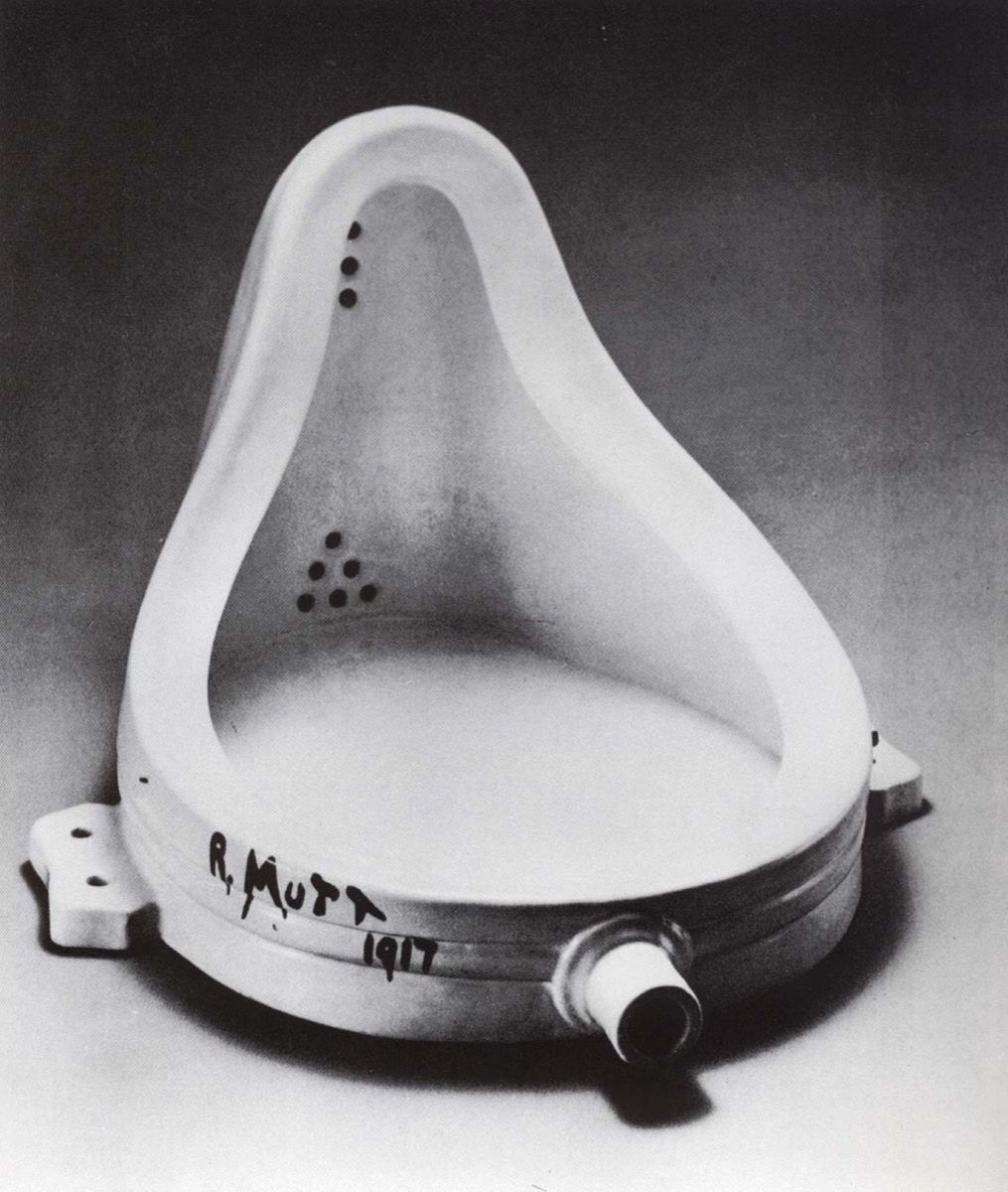
Duchamp's urinal

By taking a standard urinal, signing his name, and exhibiting it as art, Duchamp shocked the art world and made a point. What point? Well, there’s debate. My point is that it doesn’t really matter. I’m willing to accept it was clever, that it was shocking, that it was funny or creative, and that it made an interesting political or theoretical point. But it is not art. This piece is all about Duchamp, his ideas, and the thrill of the shock that he wanted to impart. This artistic statement drips with his personal essence and will. It’s interesting as a historical idea, but it has no lasting power beyond that because it expresses nothing eternal. It is the echo of the voice of one dead man. Many have since intended to copy this sort of stunt, the most famous attempt perhaps being the Piss Christ, wherein the artist placed a crucifix in a jar of urine and took a photo of it. As some have noticed, much of Modern art now seems trapped by its own urge to shock and to surprise — pushing artists into further and further odd activities in order to score the next gasp. 

However, there is a lot of Modern art that is genuinely interesting and intriguing. There are bold works of Modern art that I see and think “huh, that is a cool idea”. But this reaction is of a different sort entirely from the reaction one has upon gazing upward at the vault of the Sistine Chapel of the interior of the Hassan II mosque. In such a situation, something profound and eternal arrests us, and we lose ourselves in wonder. Who created it? What were they thinking? These questions are nothing more than idle curiosities with little importance in the face of the pure and eternal glory of the art. 

Conclusion

As I said at the beginning, this discussion can never be as tidy as one would hope. There will always be blurred edges and exceptions. I only hope that the compassionate reader will see the philosophical distinction that I have made between these two approaches to art and that my point will resonate with his aesthetic receptivity — that he will see the inherent selfishness and myopia that prevent Modern art from reaching the true artistic heights of Classic art. 

With true art, we are shown rather than told. We are given a momentary glimpse into the thing-in-itself rather than something filtered by the concepts and the impressions of the artist. With true art, we never feel the need to be shocked or surprised, as by its very nature it is supremely unique. With true art, we are given the clear eye of the world which only true genius can provide. 

As an end to this entry, I’d like to share two final pieces of art. One is a fairly cheeky photo taken by me of my friend Erick, as we visited a Modern art exhibit together. The title is my own creation. Another is one of my favorite works of Modern art; in fact, I am not exactly sure what to make of it. Perhaps you can help me.

  1. Erick pondering the depths of Modern Art, 2019

179fee89-1590-475f-ac16-3e1252526952

  1. Dream Caused by the Flight of a Bee Around a Pomegranate a Second Before Awakening, Salvador Dali

Dali

-AW


El Poder Del Enfoque


Focus

Esta escritura será mi primera en español. Que tengan compasión! La siguiente narración es mi respuesta a una pregunta que me hizo un amigo:

¿Cuál súper poder querrías tener?


Me desperté esta mañana con una nueva habilidad. Tenía (y tengo) un enfoque supremo. Puedo enfocarme en cualquier cosa, por cualquier duración, con cualquier intensidad.

Mucha gente quiere volar, quiere tener el poder de invisibilidad, quiere ser más fuerte o rápido — pero yo no. Yo quiero enfocarme mejor. Entonces, ¡este poder que acabo de desarrollar es justo lo que quería!

La primera cosa que hago es meditar, y lo hago durante una hora. Exploro partes de la mente que nunca he explorado, y tengo experiencias profundas y surrealistas. Es pura felicidad.

Por supuesto, aún tengo que trabajar y hacer mis cosas cotidianas, pero me doy cuenta que ahora puedo hacerlo mucho mejor y con mucho menos tiempo. Pero no me gusta participar en la vida social hasta que llegue la velada, entonces me pregunto: ¿qué hago?

Empiezo a crear más proyectos de la casa, empiezo a aprender a tocar el piano de nuevo, a ayudar más a mi mamá, a aprender alemán junto con el español.

Lo más interesante de todo esto es que, mientras hago cualquier cosa, se siente más divertido y enriquecedor. Pero, ¿por qué? Porque el enfoque es inherentemente agradable — lo que nos molesta de trabajo o las cosas cotidianas es que estamos pensando en las otras cosas que queremos hacer o que tenemos que hacer después. No podemos enfocarnos lo suficiente para ver esa verdad tan profunda: que lo más agradable y lo más rico es lo que hay frente a nosotros — el árbol, el sartén, el sonido del lavaplatos — todos son verdaderos universos que deberían interesar y enriquecer a cualquier persona. Pero a causa de nuestros límites en enfocar, perdemos este sentimiento. Pero yo no. Nunca más.

Entonces sí, me convierto en un hombre más eficaz y exitoso. Leo más que nunca y sin tantos malentendidos, y puedo lograr más con mi trabajo. Sin embargo, siendo honesto, todo esto no tiene mucha importancia en comparación con lo que viene.

Con este verdadero súper poder, me doy cuenta de que mis relaciones mejoran dramáticamente. Los problemas de mis amigos y familiares ahora me parecen tan interesantes como el árbol — me fascinan. Les escucho a mis amigos con un enfoque sobrenatural y les ayudo cuando pueda. Cuando estoy con ellos, estoy con ellos. También, no me enojo tan fácilmente con ellos, porque no me pierdo en las tonterías — siempre me enfoco en las cosas fundamentales: cuánto los quiero, cuánto no quieres perderlos, cuántas virtudes tienen etc.

Disfruto más el sexo, las conversaciones íntimas, los momentos menos gloriosos — todo porque mi enfoque sobrenatural me permite hacerlo.

En breve, me permite convertirme en un hombre mejor — y ¿qué importa más que eso? ¿Qué es más poderoso? Ustedes pueden tener su volar y desaparecer. Yo quiero un verdadero súper poder.

Aristotle, The Spirited Man, and the Perversion of Moral Principles

GReece

“Against that sweetness I fight lest I become a captive”

– St. Augustine


In Book VII of the Nicomachean Ethics, Aristotle develops his conception of “self-restraint” as well as its negative counterpart “lack of self-restraint”. Of particular interest to Aristotle is finding out where to classify these concepts along the spectrum of what is to be avoided in one’s character. A thorough analysis would be beyond the constraints of this paper and my abilities. I do, however, want to analyze one specific sub-distinction of “lack of self-restraint” which Aristotle develops ‒ and which, due to a key ethical difference between its two characteristics, demands that we blame one more than the other.  

This key difference ‒ which I will explain in the following section ‒ accords well with my personal philosophical beliefs on the subject; and I also think the image Aristotle presents of the “Spirited Man” is fascinating and immediately familiar to all. 

Self-Restraint

According to Aristotle, “lack of self-restraint” is one of three undesirable things pertaining to one’s character, along with vice and brutishness (135). So, while self-restraint itself is not a vice, it is blameworthy. But what is a “lack of self-restraint”?

To Aristotle, “lack of self-restraint” is due to the characteristics of softness and delicacy in a person (136). This characterization may not appear immediately intuitive, but consider the impulse you followed the last time you snoozed your alarm ‒ the warm, cozy blankets; the soft sounds of birds chirping; the uninviting thought of all the obligations that await you outside of your bed. You know you ought to get up and get cracking, but a certain softness of character, a certain delicacy, leads you astray. The same story can be told about eating too many donuts or watching too much TV ‒ you are falling victim to the sweet and easy siren song of pleasure. The self-restrained man, however, is hard and steadfast in the face of such temptations. 

But, even given this distinction between SR and LSR, Aristotle identifies a sub-distinction of LSR, which separates this definition of self-restraint into two sorts: the original and something called spiritedness.

Spiritedness

Some people lack self-restraint because they are impetuous in acting in the manner that they believe is right. Aristotle says that someone who lacks self-restraint in this way “seems to hear reason in some way, but to mishear it”. He compares this person to “swift servants who run off before they hear what is said in its entirety and then err in carrying out the command”(147). The servant is doing what he believes he ought to be doing ‒ carrying out his command ‒ and he is doing so with vim and vigor. The problem, however, is that his spirited enthusiasm and impulsivity has led him into error. Spirited men deserve blame for their character flaw; but since it is a flaw which arises out of a commitment to right reason ‒ i.e. they prematurely leap at a decision they believe is correct ‒  it merits less blame than the other sort of lack of self-restraint ‒ the original one identified at the outset. I’ll say more about that type next.

Desire-based Lack of Self-Restraint

These other people, however, lack self-restraint in a different way. These people do what they know they ought not to do, and do so in the name of desire. This brings us back to the earlier definition of LSR; these people see Reason and they cast it aside in the name of what is pleasant. 

The Difference: 

Between the actions of these two distinct Aristotelian archetypes, a key ethical difference should cause one to view them very differently: the difference in their treatment of moral principles.

By moral principles, I refer to those broader statements of moral truths that propose to transcend the specifics of a situation. Aristotle mentions Reason, and it is this reason that undergirds the principles of morality that we appeal to when considering a course of action. When asking if we ought to get out of bed and go to work, we may consider the idea that it is good to provide for one’s family. In a particular instance, it may be wrong or right to steal a car, but the principle that stealing, in general, is wrong may be true independent of the specifics of the situation. These principles rest upon what we believe is reasonable, and I believe the two archetypes presented by Aristotle relate to such principles very differently. 

In both the case of the desire-driven man and the spirited man, the men act incorrectly in the specific instances described, but the character of the desire-driven man interacts with the principles of morality in a much more blameworthy way than the spirited man, whose impulsivity is borne out of a fervency toward the principle at hand rather than a disregard for it. 

Unlike the spirited man, the desire-driven man does violence to the moral principles that he sees and understands. The desire-driven man devalues Reason by his weakness and so corrupts the principles of morality. It is his lack of respect for such principles that concerns me, and it is his weakness of will that I think is so dangerous.

Such principles, even when possibly bend-able to the specifics of the situation, are the building blocks of our moral systems, and their preservation should be of the utmost concern for the moral philosopher and for all people. Moral principles are guiding lights, which give us direction and stability even when the specifics of a situation are unknown or unknowable. Without deep respect for the principles of morality, we risk losing our grounding in a crude subjectivism and stepping away from the path that has led us so far as human beings, but on which we have so many steps yet to take.

In sum, I found these two portrayals of lack of self-restraint to be so incisive and interesting ‒ which is not surprising considering the source. But also, I felt that a brief reflection on the differences between the two might bring about some heightened clarity as to another reason why the lack of self-restraint shown by the desire-driven man might be more concerning than that shown by the spirited man; namely, due to the differing relationship that each of these men has with the principles. One man errs out of a commitment to the institution of morality; the other errs by rejecting it in the name of momentary desires. I believe we ought to prefer our spirited man because we ought to err on the side of the principles, on the side of reason.

I suppose this reflection makes me more sympathetic towards those impetuous souls who behave like the Spirited Man. Furthermore, I think it suggests that we ought to think long and hard before we buckle on our next resolution in the name of a fleeting desire. Such softness of spirit may be more dangerous than it looks. 


A Very Mis/understood Quotation

Hume

“Be a philosopher, but amidst all your philosophy, be still a man”


This is a famous quotation from the first chapter of David Hume’s Enquiry, and it may be one of the most misunderstood famous quotations in the history of philosophy. 

When I first heard this quotation, I, like many, saw it as a beautiful advocacy for a humanistic philosophy — for it to be making a point about the need for philosophy to be human-faced and to play a role in an otherwise balanced and full life. And, to be fair, it does say that; it’s not just what Hume is saying. 

The first section of the Enquiry, titled “On the Different Species of Philosophy”, explores a crucial division between two methods of philosophical inquiry. The one “easy and obvious” which serves “only to represent the common sense of mankind in more beautiful and more engaging colours” — and the other “accurate and abstruse”, and that is fatiguing to the mind. 

Hume says of the former that it will always be the preferred method of mankind generally and that those philosophers who employ it will always receive the most lasting reputations; whereas the latter will more likely be met with annoyance and disinterest (presumably this is the reason that Hume felt was behind the neglect of his philosophy by his contemporaries). He makes a passing reference to the 18th-century popularity of reading Cicero at the neglect of Aristotle as evidence of this tendency. 

Finally, Hume observes the world of the modern man — where the man must be a social club member, businessman, sportsman, academic and husband — and he suggests that the easy philosophy is perfectly suited to its needs. He writes,

“In order to diffuse and cultivate so accomplished a character, nothing can be more useful than compositions of the easy style and manner, which draw not too much from life,”

From this, he suggests that the easy philosophy seems to be selected for us by nature. And here we arrive at the full quotation at issue. It begins with a personification of nature speaking to mankind, trying to convince him of the easy philosophy. 

“Indulge your passion in science, says she, but let your science be human, and such as may have a direct reference to action and society. Abstruse thought and profound researches I prohibit, and will severely punish, by the pensive melancholy which they introduce, by the endless uncertainty in which they involve you, and by the cold reception which your pretended discoveries shall meet with, when communicated. Be a philosopher; but, amidst all your philosophy be still a man”.

Hume is here caricaturing the way that nature and our society seem to push and tempt us into a softer brand of philosophy and reward us for it. Hume is not here blatantly advocating a humanist approach to philosophy. But what is he saying? 

While Hume is not here making a beautifully poetic statement as to the need for philosophy to have a human face, he is not concluding the opposite either. He is merely stating that external forces nudge us in this direction — toward the easy philosophy — and that the deeper and unsettling philosophy is often neglected as a result. The rest of the chapter involves an integration of these two methods, which he sees as critically interdependent. 

He compares it to the relationship between the work of the anatomist on rendering the intricacies of the human eye accessible to others and the work of the artist, who is benefitted by the abstruse work of the anatomist and yet focuses his enterprise on something much more accessible to society and incorporable into human life. He says, “Accuracy is, in every case, advantageous to beauty, and just reasoning to delicate sentiment”. 

With all this said, it’s clear that Hume does not disagree with the quotation at hand per se; but there is certainly much more beneath the surface that is simply uncaptured by the usual use of this quotation. 

Perhaps this mere fact is enough for us to conclude that Hume’s work is not of the “easy and obvious” variety. 

-AW


The Corruption of a Philosophic Soul

Plato

This entry contains an excerpt from Book VI of Plato’s Republic, along with some brief reflections from my life. 

~

After completing my Master’s, I decided I wanted to spend this year going back to the classics and strengthening my philosophical foundations. This, of course, begins with re-reading Plato. The last time I read the Republic I was 17 years old, and so this time it felt completely different. Most notably, there was a section of Book VI which I found especially moving and interesting. In it, Plato, having already outlined much of what it means to be a philosopher, now takes the time to explain why there are so few philosophers.  The reason for this is two-fold: the first part is that the qualities and abilities required to be a philosopher are rare, and the second is that, even when they do occur in someone, they are often corrupted. It is his idea of corruption which interests me.

I have always loved Truth and been unsatisfied with superficial answers, and for that reason, I have studied philosophy. I, like most who study philosophy, am often treated with skepticism and met with irritation by those around me. I always have reason to believe that I could be successful at any number of things — as I have been throughout my life — and that I could make more money or achieve more fame if I dedicated my energy to something like business or acting. Due to these facts, and perhaps general weaknesses of my resolve, I often doubt myself and question the time I spend on philosophy.

After reading this passage from the Republic, I felt as if Plato was talking about me. I see some of myself in the picture he paints, and I fear that I am at risk of corrupting my soul and hampering its ability to truly flourish.

I have taken an excerpt of the conversation that takes place between Socrates and Adeimantus (translated by C.D.C. Reeve), and I provide a few brief comments at the end. I hope it refreshes you to read some of Plato’s great work.


SOCRATES: Then let’s begin our dialogue by recalling the starting point of our description of the nature that someone must have if he is to become a fine and good person. First of all, if you remember, he was led by truth, and he had to follow it wholeheartedly and unequivocally, on pain of being a lying imposter with no share at all in true philosophy.

ADEIMANTUS: That’s what we said.

SOCRATES: Well, isn’t that fact alone completely contrary to the belief currently held about him?

ADEIMANTUS: It certainly is.

SOCRATES: So, won’t it be reasonable, then, for us to plead in his defense that a real lover of learning naturally strives for what is? He does not linger over each of the many things that are believed to be, but keeps on going, without losing or lessening his passion, until he grasps what the nature of each thing itself is with the part of his soul that is fitted to grasp a thing of that sort because of its kinship with it. Once he has drawn near to it, has intercourse with what really is, and has begotten understanding and truth, he knows, truly lives, is nourished, and—at that point, but not before—is relieved from his labor pains.

ADEIMANTUS: Nothing could be more reasonable.

SOCRATES: Well, then, will a person of that sort love falsehood or, in completely opposite fashion, will he hate it?

ADEIMANTUS: He will hate it.

SOCRATES: And if truth led the way, we would never say, I imagine, that a chorus of evils could follow it.

ADEIMANTUS: Of course not.

SOCRATES: On the contrary, it is followed by a healthy and just character, and the temperance that accompanies it.

ADEIMANTUS: That’s right.

SOCRATES: What need is there, then, to go back to the beginning and compel the rest of the philosophic nature’s chorus to line up all over again? You surely remember that courage, high-mindedness, ease in learning, and a good memory all belong to philosophers. Then you objected that anyone would be compelled to agree with what we are saying, but that if he left the arguments aside and looked at the very people the argument is about, he would say that some of those he saw were useless, while the majority of them were thoroughly bad. Trying to discover the reason for this slander, we have arrived now at this question: why are the majority of them bad? And that is why we have again taken up the nature of the true philosophers and defined what it necessarily has to be.

ADEIMANTUS: That’s right.

SOCRATES: What we now have to do is look at the ways this nature gets corrupted; how it gets completely destroyed in the majority of cases, while a small number escape—the very ones that are called useless, rather than bad. After that, we must next look at those who imitate this nature and adopt its pursuit. We must see what natures the souls have that enter into a pursuit that is too valuable and too high for them—souls that, by often striking false notes, give philosophy the reputation that you said it has with everyone everywhere.

ADEIMANTUS: What sorts of corruption do you mean?

SOCRATES: I will try to explain them to you if I can. I imagine that everyone would agree with us about this: the sort of nature that possesses all the qualities we prescribed just now for the person who is going to be a complete philosopher, is seldom found among human beings, and there will be few who possess it. Or don’t you think so? ADEIMANTUS: I most certainly do.

SOCRATES: Consider, then, how many great sources of destruction there are for these few.

ADEIMANTUS: What are they?

SOCRATES: The most surprising thing of all to hear is that each one of the things we praised in that nature tends to corrupt the soul that has it and drag it away from philosophy. I mean courage, temperance, and the other things we mentioned.

ADEIMANTUS: That does sound strange.

SOCRATES: Furthermore, in addition to those, all so-called good things also corrupt it and drag it away—beauty, wealth, physical strength, powerful family connections in the city, and all that goes along with these. You understand the general pattern of thing I mean?

ADEIMANTUS: I do, and I would be glad to acquire a more precise understanding of it.

SOCRATES: Grasp the general principle correctly and the matter will become clear to you, and what I said about it before won’t seem so strange.

ADEIMANTUS: What are you telling me to grasp?

SOCRATES: In the case of every seed or growing thing, whether plant or animal, we know that if it fails to get the food, climate, or location suitable for it, then the more vigorous it is, the more it is deficient in the qualities proper to it. For surely bad is more opposed to good than to not-good.

ADEIMANTUS: Of course.

SOCRATES: So, I suppose it is reasonable that the best nature comes off worse than an inferior one from unsuitable nurture.

ADEIMANTUS: It is.

SOCRATES: Well, then, Adeimantus, won’t we also say that if souls with the best natures get a bad education, they become exceptionally bad? Or do you think that great injustices and unalloyed evil originate in an inferior nature, rather than in a vigorous one that has been corrupted by its upbringing? Or that a weak nature is ever responsible for great good things or great bad ones?

ADEIMANTUS: No, you are right.

SOCRATES: Well, then, if the nature we proposed for the philosopher happens to receive the proper instruction, I imagine it will inevitably grow to attain every virtue. But if it is not sown, planted, and grown in a suitable environment, it will develop in entirely the opposite way, unless some god comes to its aid. Or do you too believe, as the masses do, that some young people are corrupted by sophists—that there are sophists, private individuals, who corrupt them to a significant extent? Isn’t it, rather, the very people who say this who are the greatest sophists of all, who educate most effectively and produce young and old men and women of just the sort they want?

ADEIMANTUS: When do they do that?

SOCRATES: When many of them sit together in assemblies, courts, theaters, army camps, or any other gathering of a majority in public and, with a loud uproar, object excessively to some of the things that are said or done, then approve excessively of others, shouting and clapping; and when, in addition to these people themselves, the rocks and the surrounding space itself echo and redouble the uproar of their praise or blame. In a situation like that, how do you think—as the saying goes—a young man’s heart is affected? How will whatever sort of private education he received hold up for him, and not get swept away by such praise and blame, and go be carried off by the flood wherever it goes, so that he will call the same things beautiful or ugly as these people, practice what they practice, and become like them?

ADEIMANTUS: The compulsion to do so will be enormous, Socrates.

SOCRATES: And yet we have not mentioned the greatest compulsion of all.

ADEIMANTUS: What is that?

SOCRATES: It is what these educators and sophists impose by their actions if their words fail to persuade. Or don’t you know that they punish anyone who is not persuaded, with disenfranchisement, fines, or death?

ADEIMANTUS: They most certainly do.

SOCRATES: What other sophist, then, or what sort of private conversations do you think will oppose these and prove stronger?

ADEIMANTUS: None, I imagine.

SOCRATES: No, indeed, even to try would be very foolish. You see, there is not now, never has been, nor ever will be, a character whose view of virtue goes contrary to the education these provide. I mean a human character, comrade—the divine, as the saying goes, is an exception to the rule. You may be sure that if anything is saved and turns out well in the political systems that exist now, you won’t be mistaken in saying that divine providence saved it.

ADEIMANTUS: That is what I think, too.

SOCRATES: Well, then, you should also agree to this.

ADEIMANTUS: What?

SOCRATES: Each of those private wage-earners—the ones these people call sophists and consider to be their rivals in craft—teaches anything other than the convictions the masses hold when they are assembled together, and this he calls wisdom. It is just as if someone were learning the passions and appetites of a huge, strong beast that he is rearing—how to approach and handle it, when it is most difficult to deal with or most docile and what makes it so, what sounds it utters in either condition, and what tones of voice soothe or anger it. Having learned all this through associating and spending time with the beast, he calls this wisdom, gathers his information together as if it were a craft, and starts to teach it. Knowing nothing in reality about which of these convictions or appetites is fine or shameful, good or bad, just or unjust, he uses all these terms in conformity with the great beast’s beliefs—calling the things it enjoys good and the things that anger it bad. He has no other account to give of them, but calls everything he is compelled to do just and fine, never having seen how much the natures of necessity and goodness really differ, and being unable to explain it to anyone. Don’t you think, by Zeus, that someone like that would make a strange educator?

ADEIMANTUS: I do, indeed.

SOCRATES: Then does this person seem any different from the one who believes that wisdom is understanding the passions and pleasures of the masses—multifarious people—assembled together, whether in regard to painting, music, or politics for that matter? For if a person associates with the masses and exhibits his poetry or some other piece of craftsmanship to them or his service to the city, and gives them mastery over him to any degree beyond what is unavoidable, he will be under Diomedean compulsion, as it is called, to produce the things of which they approve. But that such things are truly good and beautiful—have you ever heard anyone presenting an argument for that conclusion that was not absolutely ridiculous?

ADEIMANTUS: No, and I do not suppose I ever will.

SOCRATES: So then, bearing all that in mind, recall our earlier question: can the majority in any way tolerate or accept that the beautiful itself (as opposed to the many beautiful things), or each thing itself (as opposed to the corresponding many), exists?

ADEIMANTUS: Not in the least.

SOCRATES: It is impossible, then, for the majority to be philosophic.

ADEIMANTUS: It is impossible.

SOCRATES: And so, those who practice philosophy are inevitably disparaged by them?

ADEIMANTUS: Inevitably.

SOCRATES: And also by those private individuals who associate with the majority and want to please them.

ADEIMANTUS: Clearly.

SOCRATES: On the basis of these facts, then, do you see any way to preserve a philosophic nature and ensure that it will continue to practice philosophy and reach the end? Consider the question in light of what we said before. We agreed that ease in learning, a good memory, courage, and highmindedness belong to the philosophic nature.

ADEIMANTUS: Yes.

SOCRATES: Right from the start, then, won’t someone like that be first among the children in everything, especially if his body’s nature matches that of his soul?

ADEIMANTUS: Of course he will.

SOCRATES: So as he gets older, I imagine his family and fellow citizens will want to make use of him in connection with their own affairs.

ADEIMANTUS: Certainly.

SOCRATES: They will get down on their knees, begging favors from him and honoring him, flattering ahead of time the power that is going to be his, so as to secure it for themselves.

ADEIMANTUS: That’s usually what happens, at least.

SOCRATES: What do you think someone like that will do in such circumstances—especially if he happens to be from a great city where he is rich and noble, and if he is good-looking and tall as well? Won’t he be filled with an impractical expectation and think himself capable of managing the affairs, not only of the Greeks, but of the barbarians, too? And won’t he exalt himself to great heights, as a result, and be brimming with pretension and empty, senseless pride?

ADEIMANTUS: He certainly will.

SOCRATES: Now, suppose someone gently approaches a young man in that state of mind and tells him the truth: that he has no sense, although he needs it, and that it cannot be acquired unless he works like a slave to attain it. Do you think it will be easy for him to hear that message through the evils that surround him?

ADEIMANTUS: Far from it.

SOCRATES: And suppose that, because of his noble nature and his natural affinity for such arguments, he somehow sees the point and is turned around and drawn toward philosophy. What do we suppose those people will do if they believe that they are losing his services and companionship? Is there anything they won’t do or say in his regard to prevent him from being persuaded? Or anything they won’t do or say in regard to his persuader to prevent him from succeeding, whether it is in private plots or public court cases?

ADEIMANTUS: There certainly is not.

SOCRATES: Then is there any chance that such a person will practice philosophy?

ADEIMANTUS: None at all.

SOCRATES: Do you see, then, that we weren’t wrong to say that when a philosophic nature is badly brought up, its very components—together with the other so-called goods, such as wealth and every provision of that sort—are somehow the cause of its falling away from the pursuit?

ADEIMANTUS: No, we were not. What we said was right.

SOCRATES: There you are, then, you amazing fellow! That is the extent of the sort of destruction and corruption that the nature best suited for the noblest pursuit undergoes. And such a nature is a rare occurrence anyway, we claim. Moreover, men who possess it are the ones that do the worst things to cities and individuals, and also—if they happen to be swept that way by the current—the greatest good. For a petty nature never does anything great, either to a private individual or a city.

ADEIMANTUS: That’s very true.

SOCRATES: So when these men, for whom philosophy is most appropriate, fall away from her, they leave her desolate and unwed, and themselves lead a life that is inappropriate and untrue. Then others, who are unworthy of her, come to her as to an orphan bereft of kinsmen, and shame her. They are the ones responsible for the reproaches that you say are cast upon philosophy by her detractors—that some of her consorts are useless, while the majority deserve many evils.

ADEIMANTUS: Yes, that is what they say


Firstly, I don’t want to appear arrogant. I don’t mean that I perfectly map on to Plato’s philosopher archetype — but merely that I have been blessed in a number of ways, and that those blessings often do pull me away from philosophy. Often I am told I should “get into sales” or “be a lawyer” — or that I could “make so much more money doing something else”. Furthermore, my vanity about my physical fitness or achievements often distract me and, to my mind, corrupt my soul.

I believe in Philosophy, and as it stands I believe I have the right abilities and temperament to do philosophy. It is my great fear that somehow I will ruin this and fall greatly short of my potential. And stretching a bit beyond Plato’s concern, I fear that many others will allow their other gifts and the opinions of flattering opportunists to prevent them from engaging in the philosophic contemplation that is their human birthright.

-AW

Intimacy and Solitude

IMG_7005

In this entry, you’ll read a little bit about my final days living abroad in Ireland and one of the chief thoughts that I kept having. 

~

As my time in Ireland was coming to an end, I wanted to spend it alone. I took a train to Sligo and brought the complete works of W.B. Yeats and a notebook to record my thoughts. I tried to use my phone as little as possible in order to let my mind wander and reflect in the way that it only can in solitude. 

On the morning of my second day, I took a bus to the mountain of Knocknarea, which lies just outside the city. This mountain — and much of the Sligo landscape in general —  makes many appearances in Yeats’s poems. 

I thought of many things during my time, but one theme was particularly recurring: the relationship between solitude and intimacy. Let me explain a bit more what I mean. 

I have spent 15 of the last 25 months abroad, mostly away from my family. I have seen beautiful things and had many incredible experiences, but often these experiences were tinged with the pangs of loneliness — I would often have a strong desire to share some moment with a friend or a family member. 

“I wish he were here to see this”

However, when I stood atop Knocknarea and was looking down over the coastal Irish countryside, I remember thinking that this experience is and should only be for me. My year in Ireland — while shared with many wonderful people — was, at the end of it all, my year.

I was plunging into my memories, into my fears, into my darkness and into my joys. And I needed to do it alone. 

In that moment, on that mountain, I knew I had to be alone.

But I began to wonder: will it always be this way? Ought it to be? Perhaps I have not yet truly learned what it means to give oneself fully to someone else. Perhaps I have not yet come face to face with the kind of love and intimacy that melts walls and fuses souls. 

The question became: 

Is there a level of intimacy so deep such that no experience would ever be better alone?

To me, this question was and is very difficult to answer. The common wisdom usually runs as such: that everything in life is meaningless unless you have someone to share it with. This would suggest that all intimacy should strive to reach this level — where everything is shared and all pleasures and all fears and all struggles are shared between the two souls. One might even appeal to the Greek aphorism that a true friend is “one soul dwelling in two bodies”.

But is this really so easy to accept? Are we really willing to admit that the death of individuality is the supreme goal of all intimacy — at least with the strongest forms of intimacy such as marriage? 

I am not so sure. 

Consider what are commonly called existential crises. These are intense, transformative phases of life where the very value of one’s existence is called into question in the deepest and most disruptive way. These are the moments when you ask yourself who you are and for what you live — and you ask it to yourself with absolute honesty and seriousness, such that it often derails everything else in your life for a time. 

To me, these experiences must be handled alone. You must find answers for yourself and from within yourself. In fact, the help that others may offer you is often very limited — and usually is only helpful by indirect means rather than direct ones. Their advice will ring hollow and yet something they say on accident may help. Furthermore, they cannot understand your experience, as each of these experiences is, by definition, unique and unfathomable to anyone outside. 

When you are climbing this mountain, ought not you to do it alone? I tend to believe that there is a special class of experiences that we must face alone — and that sometimes there are others that are probably better faced alone. Perhaps the sunrise after having fought a long fight with your partner the night before.  

But this could be because I have not yet understood what it means to give all of myself to someone, and perhaps my vision is limited. Or perhaps I am just terrified of what this level of intimacy would mean. Perhaps individuality is a desperate attempt to self-preserve.

I’m not sure if this poem is an answer to the question or not, but it’s beautiful and it’s Yeats, so I will use it to close this reflection and you can take from it what you will. 

~

Never Give All the Heart

Never give all the heart, for love

Will hardly seem worth thinking of

To passionate women if it seem

Certain, and they never dream

That it fades out from kiss to kiss;

For everything that’s lovely is

But a brief, dreamy, kind delight.

O never give the heart outright,

For they, for all smooth lips can say,

Have given their hearts up to the play.

And who could play it well enough

If deaf and dumb and blind with love?

He that made this knows all the cost,

For he gave all his heart and lost.


-AW

On Not Revealing Your Goals

Herakles.jpg

Below is a brief reflection on how we approach our goals. Nothing is cited, and many complicated philosophical debates are ignored. I hope you get something from it.


A few years ago, during a night of food and drink, my cousin Micah revealed that he had learned Swedish over the course of the previous 10 months. I remember being shocked at hearing him speak conversationally in Swedish, and I was even more surprised when, during our trip to Sweden later that year, he was able to maintain full conversations with native speakers. 

What really stuck with me was the reason he gave me for his secrecy. He said something close to:

If you tell people about your goals, you will never achieve them.

To me, this was an odd explanation, because it went against much of the common wisdom regarding goal-setting. I have since come to agree with Micah, and I believe his is the better attitude for approaching one’s goals. In the rest of this entry, I will explain these approaches, their various advantages, and explain why I prefer Micah’s approach and why you (probably) should too. 

THE TWO APPROACHES

One quick glance at social media, and you will see that most people are constantly informing others about their goals. The reason usually cited for this is that they want to be held accountable. The idea is that if they tell their friends and family about what their goals (learning a language, losing weight, etc) then others will support them and hold them accountable if they begin to falter. Various features of this situation are often thought to lend some sort of motivation — either out of fear of criticism if the goal is not pursued or for a yearning for praise if the goal is in fact achieved. This attitude is behind all of the fitness social media accounts, new years resolution posts, and just the general goal-exhibitionism on display in contemporary culture:

I’ll call this approach to goal-setting The Accountability Approach:

  • Tell people about your goals, because this creates a network of accountability that will support you when you lack motivation.

On the other hand, there is Micah’s approach. In this approach, what matters more is you. The goal is pursued almost in secrecy, as if it were being protected from the contamination of the outside world. The focus remains on the goal and the various virtues it would provide the life of the goal-seeker — and nothing else. The self is trained, and the focus is about discipline rather than motivation.

I’ll call this approach to goal-setting The Secrecy Approach:

  • Don’t tell people about your goals, because this will give you the false pleasures of goal-satisfaction, and rob you of the privacy often needed for the maximal dedication to your goals and the nurturing of your infant ideas.

WHY I PREFER THE SECRECY APPROACH

As I have said, I find myself thinking that The Secrecy Account is superior. I will here provide a few reasons for why I think this to be the case. 

Firstly, I think a big problem is the feedback we get from telling people our goals in the Accountability Approach. For example, I have often noticed how good it feels to me when I tell people that I will be pursuing X in university or planning to accomplish Y in my life. This concerns me, as I have zero reasons to deserve this pleasant sensation — I haven’t achieved X or Y. I worry that in many, the pleasant feedback from telling people about their goals might prematurely satisfy the thirst that ought only to be quenched by the thing truly sought after. Imagine a long list of impressive New Years resolutions hanging above someone’s office desk, and a co-worker walking by and saying “Look at those goals, good for you!”. With secrecy, we do not experience such premature pleasures — we only experience the struggle toward the goal each day, and this, among other benefits, makes the achievement taste all the more sweet.

Secondly, when telling people about our goals, I believe we are placing the emphasis on the wrong value — on motivation rather than discipline. I have long believed that too many people seek motivation — that mysterious impulse to act — rather than developing the internal habits of discipline which operate regardless of motivation (as it is normally, phenomenologically conceived). I go to the gym, study a foreign language, eat the proper food, and sleep at the proper time not because I feel that gust of desire but because, based on my deeply held values and my idealized vision of myself, I must do these things. I must continue because I said I would — because these things help me realize my potential, etc. 

Lastly, I can’t help but feel that if we follow the Accountability Approach, our goals cease to be ours. Once our goals are known, we make ourself vulnerable to an onslaught of advice from our community. Some may be helpful, some may not matter, some may be a disaster — but all of it dirties the purity of our originality.  I think this not only alters the path of goal-seeking, but it also degrades the eventual achievement by divvying up the glory amongst the masses. When we open up our deepest aims and purposes to the world, we sacrifice a certain sacred solitude, a supreme and unlimited focus that I believe, more than being perhaps indefinitely special, is more conducive to success in the long-term.

SOME LIMITS

Now that being said, I won’t say this preference is without limits. I can imagine some situations where it is better to pursue goals in groups — for example in activities which demand partners, like martial arts or language learning. Even then, however, the knowledge of the goal can be restricted to those who are sharing in it. 

Also, perhaps there are people who need to know about your goal who aren’t sharing in it. For example, a man whose goal is to learn a language by attending language classes after work would surely need to inform his wife of such a goal. 

And in general, perhaps this method simply does not apply to all people. Perhaps some require support from others to achieve their goals. This, to me, is a defect. I have this defect myself sometimes, and it is something that I am trying to curb and eliminate.

I truly believe that our goals, those things into which we pour our being and toward which we fix our gaze, are among the most important parts of human life. For this reason, I have come to believe that a degree of privacy and secrecy must be observed with respect to them. I am, you could say, a radical about originality, about sheltering our essence from unwanted outside influence and contamination as much as is possible. By hiding our goals I think we go far in doing just that. 

Thanks to my cousin Micah, a true radical about originality, for giving these brief thoughts their birth. 

-AW


Philosophical Distinctions and Language

Ourobourous

~

In this entry, you will find a short reflection on the relationship between language and philosophy, and my fears about whether or not, because of the former, we can ever hope to learn anything substantial from the latter. 


One of the go-to tools of a philosopher is the distinction

A distinction, whether made by a philosopher or not, is a method of demarcating concepts and guarding against conflation and confusion. For example, when I say that there is a fundamental difference between statements like “that Spanish woman is dancing” and “you should dance with that Spanish woman”, I make a distinction. 

The difference between these statements or the reason for this difference is among the things I am trying to get at with my distinction. For example, in this case, I have drawn a distinction between these two sorts of statements in order to suggest that there are at least two kinds of statements in the world and that they have different natures, functions, or purposes. The first statement is descriptive, in that it is describing matters of fact in a neutral way; while the other is prescriptive (or normative), in that it attempts to guide action and present some form of an idea or norm — i.e. what we should do. 

Without becoming distracted by the example, I will simply say that in drawing distinctions we are trying to discover something beyond the concepts — something fundamental to the world. The idea is that this distinction within our language reveals something deeper about our world. 

A failure to make good distinctions, it has often been thought, leads to confusion. Take as another example these two passages from the Tractatus, where Wittgenstein writes,

“3.323 In the language of everyday life it very often happens that the same word signifies in two different ways—and therefore belongs to two different symbols—or that two words, which signify in different ways, are apparently applied in the same way in the proposition. Thus the word “is” appears as the copula, as the sign of equality, and as the expression of existence; “to exist” as an intransitive verb like “to go”; “identical” as an adjective; we speak of something but also of the fact of something happening. (In the proposition “Green is green”—where the first word is a proper name and the last an adjective—these words have not merely different meanings but they are different symbols.)

3.324 Thus there easily arise the most fundamental confusions (of which the whole of philosophy is full).”

Here Wittgenstein, among other things, points out that there are at least three distinct ways in which the word “is” can function. 

(1) As the copula — as that which links subject and predicate like “The man is tall”. 

(2) As the sign of equality, as in “2 plus 2 is 4”. 

(3) As the sign of existence, as in “I am that I am”.

These are good distinctions, and some of the most perplexing philosophical puzzles have arguably been generated by failing to make them. One such example is, according to Kant, the confusion within Anselm’s ontological argument for the existence of God. Many years later, Quine had much to say on how we ought to use the word “is” in order to avoid confusion. 

I still believe in Philosophy, and I employ such distinctions in this philosophical manner; but I, just like the later Wittgenstein, have fears that such distinctions are far-too limited by the language in which they appear and that nothing fundamental is really being signaled at. I have the creeping fear that we are just blabbing on about our own language and nothing more; which would reduce philosophy to, as Russell said, “at best, a slight help to lexicographers, and at worst, an idle tea-table amusement.”

To see where this worry comes from, consider the following philosopher, let’s call him Saaz, who wants to suggest something about the human personality by drawing a distinction between the expressions “to like” and “to love”. 

To Saaz, there is something expressed about the human personality by our separating these concepts of “love” and “like”(what he is aiming at is here an irrelevancy). But now imagine Saaz drawing this distinction in the presence of a native Spanish speaker. 

In Spanish, they use (among others) the words “gustar”, “querer”, and “amar” all to signify a form of romantic attraction. The meanings of these verbs can be loosely mapped onto English equivalents (“gustar” = like, “querer” = second-degree love, and “amar” = first-degree love), but they are simply not the same, and this “distinction” that Saaz draws between “like” and “love” would make little to no sense in Spanish, where the “distinction” would be, at least, between three verbs and not of the same sort.

How can a distinction be used to learn something about our world if it is so limited by the language itself

This fear — that all of our subtle argumentative and philosophical maneuvers merely reveal things about the way we use our language — continues to terrify me.

The importance of language is philosophy is certainly not subject to question. The question is: how far does this importance go? How much of what we are doing is real, and how much is just verbal gymnastics with no prize at the end?

Returning to our first example, can we really make the distinction between “normativity” and “description”? Is such a distinction fundamental to the world or merely an expression of our language? 

At this point, I remain uncertain of the implications of this linguistic reduction of our critical thinking. It could be true that there is a way to circumvent the powerful barriers of language; or, it could be true, with the most extreme implications, that

5.6 Los límites de mi lenguaje son los límites de mi mundo